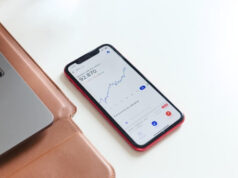









Most people don’t lose money in the stock market because they are unintelligent. Instead, they lose money because they practise with real cash. That is the uncomfortable truth: many beginners only learn after painful losses. Fortunately, paper trading exists for a reason, and platforms like Thinkorswim make it one of the safest ways to learn how U.S. stock trading actually works.
Paper trading allows you to trade real market data using virtual money. As a result, you experience the psychology, tools, and mechanics of trading without risking your capital. For anyone in the UK or elsewhere looking to trade U.S. stocks, Thinkorswim’s paper trading feature offers one of the most realistic practice environments available today.
What Paper Trading Really Means in Practice
Paper trading is a simulated trading environment that mirrors live market conditions. However, instead of risking real money, you place trades with virtual funds. Prices move in real time, charts behave normally, and order types function as they would in a live account.
According to data from brokerage education reports, over 70% of new retail traders lose money within their first year when they start with real funds. Paper trading exists to reduce that statistic. More importantly, it allows you to build skills before emotions get expensive.
Unlike demo platforms that oversimplify trading, Thinkorswim offers full-featured paper trading. Therefore, you can practise stocks, options, ETFs, and even advanced order strategies under real U.S. market conditions.
Why Thinkorswim Is Ideal for Paper Trading U.S. Stocks
Thinkorswim, developed by TD Ameritrade and now operated under Charles Schwab, is widely regarded as one of the most powerful retail trading platforms. Its paper trading feature, known as PaperMoney, uses the same interface as the live platform.
This matters because many traders fail when transitioning from demo to real trading. However, when the tools remain identical, that transition becomes far smoother. Charts, indicators, timeframes, scanners, and order types remain consistent.
Additionally, Thinkorswim provides delayed and real-time data options depending on your account setup. Therefore, you can practise U.S. stock trading in an environment that closely resembles live execution.
Also Read:
- How to Use Dollar-Cost Averaging for Stock Market Beginners
- Long-Term vs Short-Term Stock Trading: Which One Is Safer for Beginners?
- How to Use Fractional Shares to Start Investing with Just $50
How to Set Up Paper Trading in Thinkorswim
Getting started with paper trading in Thinkorswim is straightforward. First, you create a Thinkorswim account through TD Ameritrade or Charles Schwab. After logging in, you simply select PaperMoney instead of the live trading environment.
Once inside, the platform credits your account with virtual funds, usually around $100,000. While that amount may feel unrealistic, it gives you room to test different strategies. However, many traders choose to mentally cap their trades to match the size of a realistic future account.
Importantly, everything you do in PaperMoney follows the same workflow as live trading. As a result, learning becomes practical rather than theoretical.
Understanding How Paper Trading Works on Thinkorswim
Paper trading on Thinkorswim simulates real market conditions using live or slightly delayed data. You place buy and sell orders, set stop losses, manage positions, and track performance just like a real trader.
However, it is important to understand one limitation. Paper trading often fills orders more easily than live markets, especially during volatile periods. Therefore, you should not assume every paper trade fill would occur the same way with real money.
Still, for learning order placement, risk management, and chart reading, Thinkorswim paper trading remains extremely effective.
Practising U.S. Stock Trades Safely
If your goal is to trade U.S. stocks safely, paper trading should be treated seriously. Too many beginners treat demo accounts like video games. As a result, they develop habits that fail under real pressure.
Instead, you should approach paper trading as if the money were real. For example, the risk is only a small percentage per trade. Track your entries and exits carefully. Review losing trades honestly.
According to behavioural finance studies, emotional discipline contributes more to long-term trading success than strategy alone. Paper trading helps you practise discipline before emotions become costly.
Using Charts and Indicators Effectively
Thinkorswim offers advanced charting tools, which make paper trading especially valuable. You can test moving averages, VWAP, RSI, MACD, and volume-based indicators without financial risk.
However, beginners often make the mistake of using too many indicators at once. Instead, start with simple price action and one or two indicators. Over time, you can layer complexity as your understanding improves.
Because paper trading allows unlimited experimentation, you can discover which indicators genuinely help your decision-making rather than relying on online hype.
Learning Risk Management Through Paper Trading
Risk management is where most traders fail. Fortunately, paper trading allows you to practise it safely. You can test stop-loss placement, position sizing, and reward-to-risk ratios without consequences.
For example, you might discover that risking 1% per trade leads to better consistency than risking 5%. These lessons become far more powerful when learned through experience rather than theory.
Moreover, Thinkorswim’s analytics tools allow you to review performance metrics. As a result, you can identify patterns in your behaviour and correct them early.
Common Mistakes to Avoid When Paper Trading
Despite its benefits, paper trading can be misused. One common mistake is overtrading. Because there is no financial pain, traders often take poor setups repeatedly.
Another mistake involves ignoring execution realism. While fills may appear perfect, live markets behave differently during high volatility. Therefore, it helps to practise conservative assumptions.
Finally, many traders stay in paper trading too long. Practice is essential, but progress requires a structured transition to small real trades.
When to Move From Paper Trading to Live Trading
There is no perfect timeline for leaving paper trading. However, consistency provides a useful guide. If you can follow your rules for several weeks and show stable results, you may be ready to trade small real positions.
That transition should feel uncomfortable. However, it should not feel reckless. By starting with minimal capital, you bridge the psychological gap while keeping risk controlled.
Importantly, paper trading should remain a tool even after you go live. Many experienced traders still test new strategies in Thinkorswim’s PaperMoney environment.
How Paper Trading Supports Long-Term Portfolio Growth
Paper trading is not just for day traders. It also helps long-term investors understand order execution, market timing, and portfolio allocation. You can practise buying U.S. stocks, rebalancing positions, and managing drawdowns.
In fact, data from investor education studies shows that traders who practise before investing tend to hold positions longer and panic less during volatility. That behaviour supports long-term portfolio growth.
For UK-based traders entering U.S. markets, this preparation becomes even more valuable due to currency exposure and different market hours.
Also Read:
- How to Sell Digital Stickers on Etsy and Make $500/Month
- Top 10 Mistakes New Stock Traders Make in the First 30 Days
- Differences Between CFD and Real Stock Trading Explained Simply
Final Thoughts
Paper trading is not about pretending to trade. Instead, it is about preparing to trade. When used correctly, Thinkorswim’s paper trading environment offers one of the safest ways to learn U.S. stock trading without risking capital.
By practising execution, discipline, and risk management, you build confidence rooted in experience. Over time, that confidence becomes your greatest asset.
If you approach paper trading with seriousness and structure, it can shorten your learning curve dramatically. More importantly, it can protect you from mistakes that cost others years of progress. In trading, survival always comes before profit. Paper trading helps you master survival first.