











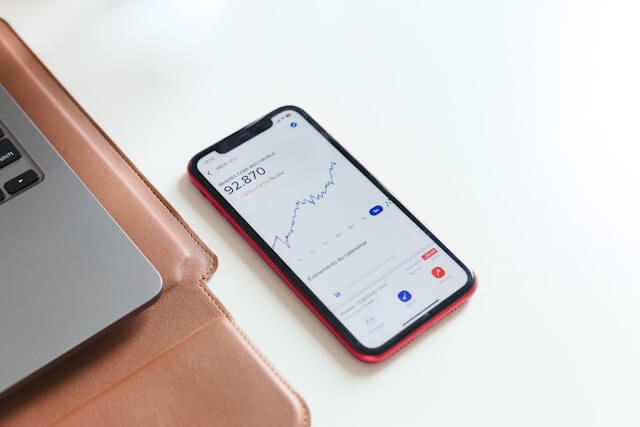
Have you ever wanted to own a piece of Amazon, Tesla, or Google but felt discouraged by their sky-high share prices? For decades, investing in premium stocks required thousands of dollars upfront. However, the investment landscape in the United States has transformed dramatically. Today, you can use fractional shares to start investing in the United States with as little as $50. This revolutionary approach has democratized the stock market, making it accessible to millions of Americans who previously felt left out.
According to FINRA, nearly 40% of new U.S. investors in 2024 began with less than $500. Moreover, Statista data shows that over 33% of Americans now own fractional shares through online brokers. These statistics reveal a fundamental shift in how people approach wealth building. Instead of waiting years to save enough for a single share, beginners can now diversify their portfolios immediately. Therefore, understanding how to leverage fractional shares investing USA has become essential for anyone serious about building financial security in America.
In this comprehensive guide, we’ll explore everything you need to know about fractional investing beginner strategies. We’ll cover what fractional shares are, why they benefit beginners, and how to invest with $50 U.S. stocks strategically. Furthermore, we’ll examine the best brokers for fractional shares U.S. and discuss both the opportunities and risks involved. By the end, you’ll have a clear roadmap for starting your investment journey with minimal capital.
What Are Fractional Shares and How Do They Work?
1. Understanding Fractional Share Basics
Fractional shares represent a portion of a single stock rather than a whole share. Think of it like buying a slice of pizza instead of the entire pie. For instance, if Apple stock trades at $180 per share and you invest $50, you’d own approximately 0.28 shares. Consequently, you receive proportional dividends and benefit from price appreciation just like full-share investors.
2. The Technology Behind Fractional Investing
The technology enabling fractional investing emerged from major brokerages recognizing a crucial market gap. Traditionally, investors needed enough capital to purchase at least one complete share. However, this requirement excluded millions of potential investors from owning high-value stocks. Therefore, platforms began aggregating customer orders and dividing shares mathematically among multiple investors.
3. How Fractional Share Transactions Work
The mechanics work seamlessly behind the scenes. When you place an order for $50 worth of a stock, your broker purchases the equivalent fraction on your behalf. Additionally, the broker maintains records of your exact ownership percentage. You don’t physically hold a fractional certificate. Instead, the broker’s system tracks your fractional position digitally. Meanwhile, you maintain full rights to your proportional share of dividends and voting rights in most cases.
Benefits of Fractional Investing for Beginners with Limited Capital
This stock investing strategy comes with a lot of advantages. The benefits include:
1. Immediate Market Access
Fractional shares investing in America offers several compelling advantages for newcomers. First and foremost, you can start building wealth immediately without waiting to accumulate large sums. This immediacy matters because time in the market historically outperforms timing the market. Subsequently, even small investments can compound significantly over decades.
2. Portfolio Diversification Made Easy
Diversification becomes achievable with minimal capital. Previously, spreading $500 across multiple stocks was impossible if each share cost hundreds of dollars. Now, however, you can allocate $50 each to ten different companies. This strategy reduces risk by ensuring that no single stock dominates your portfolio. Furthermore, diversification across sectors protects you from industry-specific downturns.
3. Zero Commission Trading
Low-cost investing United States has never been more accessible. Most brokers offering fractional shares charge zero commissions. Therefore, every dollar you invest goes directly into stocks rather than trading fees. Key benefits include:
- No transaction costs eating into returns
- Ability to invest small amounts regularly
- Dollar-cost averaging without fee penalties
- More money working for you in the market
Additionally, fractional investing eliminates the pressure to save thousands before taking action. You can invest small amounts regularly through dollar-cost averaging, which smooths out market volatility over time.
4. Psychological and Educational Benefits
Psychological benefits shouldn’t be overlooked either. Starting with $50 removes intimidation factors that prevent many people from investing. Moreover, seeing even modest gains can motivate continued investment. This positive reinforcement helps build lifelong financial habits. Consequently, fractional investing serves as an excellent educational tool for understanding market dynamics without risking significant capital.
Also Read:
- 7 Best Dividend-Paying Stocks for Passive Income
- How to Start Trading Stocks with as Little as $100
- Is Trading 212 Cash ISA Safe?
Step-by-Step Guide on How to Use Fractional Shares to Start Investing in the United States with Just $50
Step 1: Choose the Right Broker
Starting your fractional investing beginner’s journey requires just five straightforward steps. First, choose a reputable broker that supports fractional share trading. Research platforms like Robinhood, Charles Schwab, or Fidelity. Compare their features, user interfaces, and available investment options. Most importantly, verify that they offer commission-free fractional trading.
Step 2: Open Your Brokerage Account
Second, open your brokerage account online. This process typically takes 10-15 minutes. You’ll need:
- Social Security number
- Driver’s license or government ID
- Bank account information
- Contact information
Additionally, brokers must verify your identity for regulatory compliance. Once approved, you can link your bank account to transfer funds. Most platforms allow instant deposits, meaning you can start investing the same day.
Step 3: Fund Your Account
Third, fund your account with your initial $50. Many brokers have no minimum deposit requirements for fractional investing. Therefore, you can start with any amount you’re comfortable risking. However, remember that while $50 is accessible, you should only invest money you won’t need for immediate expenses. Meanwhile, consider setting up automatic recurring deposits to build your portfolio consistently.
Step 4: Research and Select Investments
Fourth, research and select your investments carefully. Don’t simply chase popular stocks or follow social media hype. Instead, investigate companies with strong fundamentals, competitive advantages, and growth potential. Furthermore, consider low-cost index funds like those tracking the S&P 500. These provide instant diversification across hundreds of companies.
What to research:
- Company financial statements
- Analyst reports and ratings
- Industry trends and competition
- Dividend history (if applicable)
- Price-to-earnings ratios
Read analyst reports, check financial statements, and understand what you’re buying.
Step 5: Execute Your First Trade
Fifth, execute your first trade. Navigate to your broker’s trading interface and search for your chosen stock. Select the dollar amount option rather than the share quantity option. Enter $50 or however much you want to invest. Review the order details carefully before confirming. Subsequently, you’ll receive a confirmation showing exactly how many fractional shares you purchased. Congratulations—you’re now an investor!
Best U.S. Brokers Offering Fractional Shares
Charles Schwab: Educational Excellence
Charles Schwab reports that fractional share trading increased by 60% among millennials in 2023. This surge reflects the platform’s commitment to accessible investing. Schwab allows fractional investing in S&P 500 stocks with no minimums. Moreover, their educational resources help beginners understand market fundamentals.
Pros:
- Robust research tools
- Excellent customer service
- Comprehensive educational resources
- No minimum investment required
Cons:
- User interface can feel overwhelming for complete novices
Robinhood: Beginner-Friendly Interface
Robinhood revolutionized commission-free trading and pioneered fractional shares for retail investors. The app’s intuitive design makes it perfect for beginners. Additionally, Robinhood offers fractional shares across thousands of stocks and ETFs.
Pros:
- No minimum deposit required
- Simple, intuitive mobile app
- Instant account approval
- Perfect for invest with $50 U.S. stocks strategies
Cons:
- Limited research tools compared to traditional brokers
- Gamification elements can encourage excessive trading
Fidelity: Comprehensive Traditional Broker
Fidelity combines traditional brokerage reliability with modern fractional investing features. The platform supports fractional shares for stocks priced above $1. Moreover, Fidelity provides exceptional research resources, educational content, and retirement planning tools.
Pros:
- Industry-leading customer service
- Extensive research capabilities
- Retirement planning tools
- Educational resources
Cons:
- Mobile app complexity might intimidate absolute beginners
Interactive Brokers: Advanced Trading Platform
Interactive Brokers caters to more sophisticated investors but offers excellent fractional share capabilities. The platform supports fractional trading across U.S. and international markets. Additionally, Interactive Brokers provides advanced charting tools and algorithmic trading options.
Best for:
- Experienced investors
- International market access
- Advanced trading strategies
Not ideal for:
- First-time investors starting with $50
- Those seeking simple interfaces
Public.com: Social Investing Experience
Public.com has emerged as a social investing platform with strong fractional share offerings. The app emphasizes community interaction and educational content. Moreover, Public allows fractional investing with no minimums and charges no commissions.
Pros:
- Social features for learning
- No commissions or minimums
- Community-driven insights
Cons:
- Limited investment options compared to larger brokerages
Risks and Limitations of Fractional Investing
Here are some of the risks and limitations of fractional investing you should look out for:
1. Stock Availability Restrictions
While fractional shares democratize investing, they carry certain limitations worth understanding. First, not all stocks support fractional trading at every broker. Some platforms restrict fractional investing to specific securities. Therefore, research your broker’s offerings before assuming availability. Additionally, international stocks and certain ETFs may not support fractional purchases.
2. Liquidity and Transfer Challenges
Liquidity can sometimes pose challenges with fractional shares. If you own 0.3 shares of a thinly traded stock, selling might take longer than expected. However, this rarely affects popular, high-volume stocks like Apple or Microsoft. Furthermore, some brokers may convert fractional shares to cash during account transfers rather than moving them directly. Consequently, you might face unexpected tax implications during brokerage switches.
3. Dividend and Voting Rights Considerations
Dividend reinvestment works slightly differently with fractional shares. While you’ll receive proportional dividends, some brokers automatically reinvest fractional dividends rather than paying cash. This isn’t necessarily negative, but it’s worth understanding.
Important considerations:
- Some companies don’t extend voting privileges to fractional shareholders
- Automatic dividend reinvestment may be mandatory
- Fractional positions rarely matter for corporate governance
- Small investors typically aren’t affected by voting limitations
4. Psychological Risk of Over-Trading
The psychological risk of over-trading increases with fractional shares’ accessibility. Because you can buy and sell with minimal capital, frequent trading becomes tempting. However, excessive trading typically reduces returns due to taxes and potential transaction fees. Therefore, maintain discipline and stick to your long-term investment strategy. Remember that successful investing requires patience, not constant activity.
5. Market Volatility Impact
Market volatility affects fractional shares identically to full shares. Your $50 investment can lose value just as easily as it can gain. Furthermore, individual stocks carry more risk than diversified funds. Consequently, beginners should consider allocating at least some capital to index funds. Never invest money you’ll need within the next three to five years.
How $50 Can Grow Through Fractional Share Investing
Example 1: Single Stock Investment in Amazon
Let’s explore concrete scenarios showing fractional investing’s potential. Suppose you invested $50 in Amazon stock in January 2020. At approximately $1,850 per share, you’d own roughly 0.027 shares. By December 2024, Amazon traded around $180 (after a 20-to-1 stock split). Your fractional shares would have grown to approximately $95, representing a 90% return. Moreover, this doesn’t account for potential dividend reinvestment.
Example 2: Monthly S&P 500 Index Fund Contributions
Consider a different strategy: investing $50 monthly into an S&P 500 index fund through fractional shares. Over five years, you’d invest $3,000 total. Assuming the market’s historical 10% average annual return, your portfolio could grow to approximately $3,875.
Long-term projection:
- 5 years: ~$3,875
- 10 years: ~$10,200
- 30 years: Over $100,000
Subsequently, continuing this habit for 30 years could result in over $100,000. This demonstrates the power of consistent, small investments compounding over time.
Example 3: Diversified Sector Approach
A diversified approach might involve splitting $50 across five different sectors:
- Technology: $10
- Healthcare: $10
- Consumer Goods: $10
- Energy: $10
- Financial Services: $10
This strategy reduces risk while maintaining growth potential. For instance, if tech stocks surge 20% while energy drops 10%, your overall portfolio remains balanced. Furthermore, this approach teaches valuable lessons about sector rotation and market dynamics.
Example 4: Dividend Aristocrats Strategy
Some investors use fractional shares to buy dividend aristocrats—companies that have increased dividends for 25+ consecutive years. For example, $50 in Johnson & Johnson might yield $1.50 annually in dividends initially. While this seems modest, reinvesting dividends into additional fractional shares accelerates growth. Over decades, this snowball effect can significantly outpace simple capital appreciation.
Future Trends in Fractional Investing in the U.S. Market
Below are the future trends you should know about fractional investing within the U.S. market:
1. Regulatory Enhancements and Shareholder Rights
The fractional shares revolution continues accelerating across American financial markets. Industry analysts predict that fractional investing will become the standard rather than the exception within five years. Moreover, regulatory bodies are exploring frameworks to enhance fractional shareholder rights. This could include guaranteed voting privileges and improved transfer mechanisms between brokers.
2. Cryptocurrency and Alternative Asset Integration
Cryptocurrency fractional ownership is expanding rapidly alongside traditional equities. Many platforms now offer fractional Bitcoin and Ethereum purchases. Furthermore, tokenization technology promises to extend fractional ownership to real estate and alternative assets. Consequently, investors may soon fractionally own commercial properties or fine art through blockchain-based platforms.
3. AI-Powered Portfolio Management
Artificial intelligence will increasingly personalize fractional investment strategies. Robo-advisors are becoming more sophisticated at analyzing individual financial situations and recommending optimal fractional allocations. Additionally, machine learning algorithms can identify emerging opportunities and automatically rebalance portfolios. However, human judgment remains crucial for navigating unprecedented market conditions.
4. Workplace Retirement Integration
Employer-sponsored retirement plans are beginning to incorporate fractional shares. Some 401(k) providers now allow fractional investing within workplace retirement accounts. This development significantly expands fractional share accessibility. Moreover, it enables better diversification within tax-advantaged accounts. Therefore, employees can optimize retirement portfolios without requiring large account balances.
5. ESG and Impact Investing Growth
Social responsibility investing through fractional shares is gaining momentum. Younger investors particularly value ESG (Environmental, Social, Governance) criteria when selecting investments. Fractional shares make it affordable to build portfolios aligned with personal values.
Emerging ESG opportunities:
- Renewable energy companies
- Sustainable technology firms
- Socially responsible index funds
- Impact investing platforms
Furthermore, impact investing platforms are emerging to facilitate fractional ownership in sustainable companies. This trend reflects broader cultural shifts toward conscious capitalism.
Also Read:
- How to Integrate Print-on-Demand with Amazon FBA for Passive Income
- How to Sell Digital Stickers on Etsy and Make $500/Month
- Technical Indicators Every Beginner Trader Should Know
Conclusion
Learning to use fractional shares to start investing in the United States represents more than just a financial decision. It’s a commitment to your future prosperity and independence. The barriers that once prevented ordinary Americans from participating in wealth-building have crumbled. Today, you don’t need thousands of dollars or specialized knowledge to begin investing. Instead, you need just $50, an internet connection, and the willingness to start.
The statistics speak volumes about fractional investing’s transformative impact. With nearly 40% of new investors starting with less than $500, the investment landscape has fundamentally democratized. Moreover, the 60% increase in fractional trading among millennials demonstrates this generation’s embrace of accessible investing. These trends aren’t temporary fads. Rather, they represent a permanent shift in how Americans build wealth.
Start Small, Dream Big
Remember that every successful investor started somewhere. Warren Buffett made his first stock purchase at age 11 with $114.75. While that seemed like a modest beginning, it launched one of history’s greatest investment careers. Similarly, your $50 investment today plants seeds for future financial security. Furthermore, the habits you develop now—researching companies, diversifying holdings, and investing consistently—matter more than the initial dollar amount.
Choose Your Platform and Begin
The best brokers for fractional shares in the U.S. have made starting easier than ever. Whether you choose Robinhood’s simplicity, Fidelity’s comprehensive tools, or Schwab’s educational resources, excellent options exist for every preference. Additionally, zero-commission trading ensures your money works for you rather than generating fees. Therefore, there’s never been a better time to begin your investment journey.
Take Action Today
Don’t let perfect become the enemy of good. You might think you should wait until you know more, have more money, or understand markets better. However, the most valuable education comes from actual investing experience. Start with your $50, learn from real market movements, and adjust your strategy as you grow. Meanwhile, continue educating yourself through books, podcasts, and reputable financial websites.
Your action plan:
- Open a brokerage account today
- Deposit your first $50
- Purchase your first fractional shares
- Choose quality companies or diversified index funds
- Set up automatic monthly contributions ($25-$50)
- Commit to staying invested through market ups and downs
Most importantly, commit to staying invested through market ups and downs. Your future self will thank you for taking this crucial first step. The journey to financial independence begins not with thousands of dollars, but with the courage to start small and stay consistent. Welcome to the world of fractional shares investing in the USA. Your path to building lasting wealth has officially begun.
Do you need an expert guide? Send an email to info@digibasin.com.